

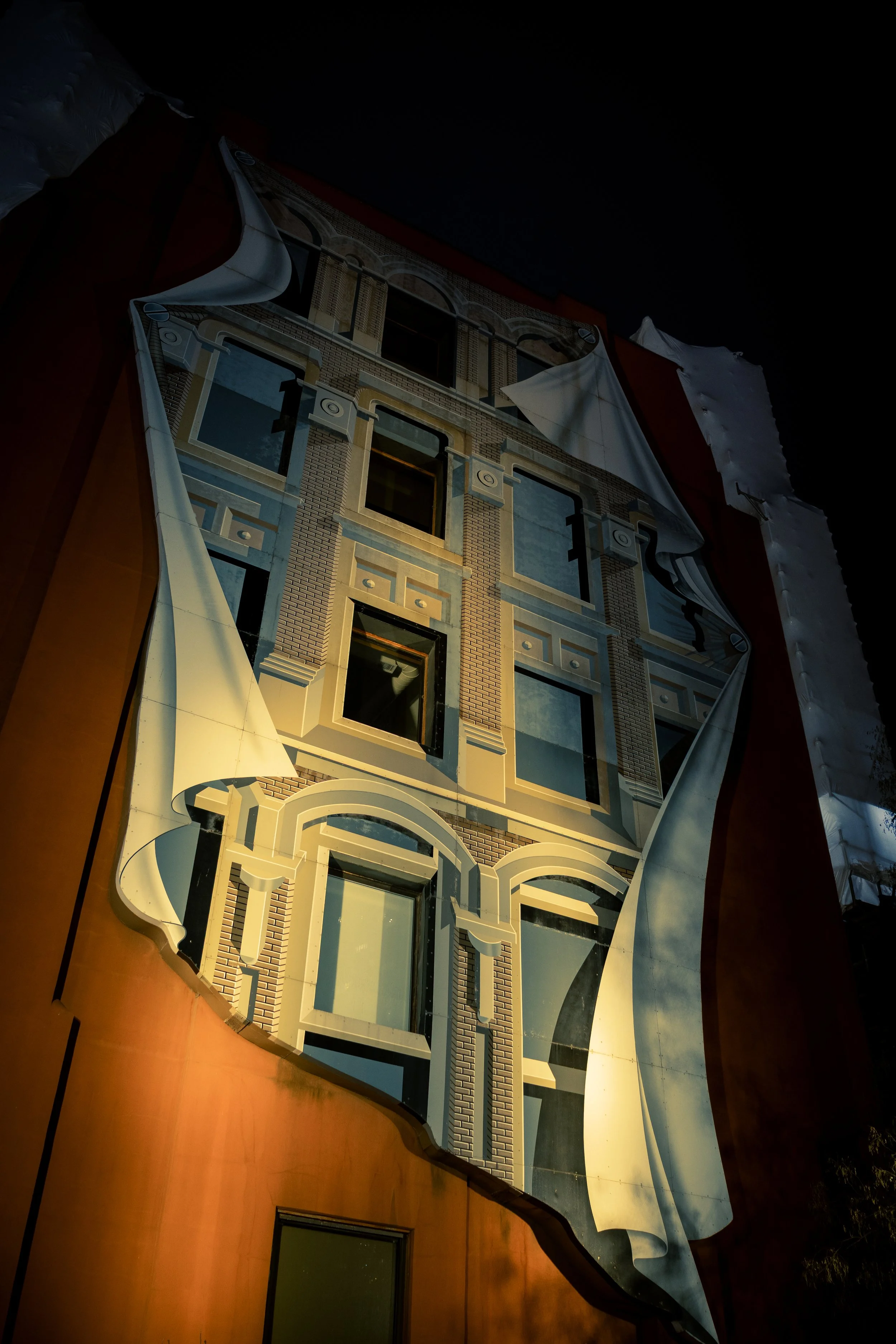
This photograph was taken at Berczy Park in Toronto and depicts a mural rather than an illegal piece. That distinction matters. Murals occupy a rare space in the graffiti ecosystem: they are legal, professional, and often commissioned. It’s creator, a Canadian artist named Derek Besant, was likely paid for his work. He went to university, had prestigious opportunities to show his art at large scale, was a museum gallery designer, and became an identity in “high” art. Although, he was caught plagiarizing, sounds low to me. These conditions stand in stark contrast to the realities faced by many graffiti artists, particularly taggers, whose work is often shaped by limited access to education, legitimacy, and professional pathways (Cannatella, 2015; Lau, 2022)
This contrast is central to Concrete Expression. Graffiti is frequently discussed as a single category, but research consistently shows that it contains vastly different intentions, hierarchies, and social meanings. Tagging, for example, functions as a distinct communicative system involving power, status, and territorial identity (Gross et al., 1997; Taylor, 2011). Murals, on the other hand, are often absorbed into institutional frameworks and civic initiatives, such as Toronto’s StreetARToronto program, which aims to beautify the city while reducing illegal graffiti (Meese-Tamuri, 2015). These initiatives open doors for some artists implicitly closing them for others.
What captivated me most while photographing this piece, however, was not its professionalism but its ambiguity. At first glance, the windows appear real. Some seem to reveal an interior space, while others are clearly painted over. You can see seams crossing over certain window frames, disrupting the illusion very slightly, while other windows do not have it! It becomes difficult to tell which windows belong to the building and which belong to the mural. This confusion creates a subtle unease and visual tension between what is functional and what is representational.
The painted curtains amplify this feeling. They are oversized, dramatic, and entirely unfunctional. Curtains are meant to conceal or reveal, yet here they cover nothing. They hang theatrically over painted and real windows alike, blurring the boundary between reality and illusion. The effect feels almost dreamlike, as if the building itself is performing. This sense of delirium reminded me of a strange, half-joking thought while shooting the photo. Something a drunk uncle might ramble in hopes of passing on wisdom, only to confuse you more: “a curtain will never cover a window if it’s too small, but it doesn't matter if it’s too big.” It’s absurd, I know, but it feels true; graffiti often operates in that space between absurdity and meaning anyways.
That ambiguity reflects broader discussions in graffiti scholarship about impermanence and performance. Graffiti is not meant to last; its removal is often part of its meaning (Brazioli, 2025). Even murals, though more protected, exist within systems that decide when art is preserved, altered, or erased. Scholars have argued that graffiti functions as a performative act that engages with authority, legality, and visibility precisely because it risks disappearance (Halsey and Young, 2006; Wild et al., 2024)/
In this way, the mural’s false windows and oversized curtains become sybolic. They suggest access without entry, visibility without permission. They mirror the contradictions within urban art itself: who is allowed to speak, where, and under what conditions. Publoic reaction to graffiti, whether admiration, anger, or dismissal, plays a crucial role in this dynamic and shaping how art is valued in shared spaces (Radice, 2017; Kee et al., 2022).
This photograph ultimately sits at the intersection of many tensions: legal and illegal, professional and informal, visible and concealed. It reflects how cities curate certain expressions while suppressing others, and how art in public space becomes a negotiation between artists, institutions, and everyday people. By documenting this mural, I am not only archiving an image, but participating in an ongoing conversation about accessibility, legitimacy, and who gets to leave a mark on the city.
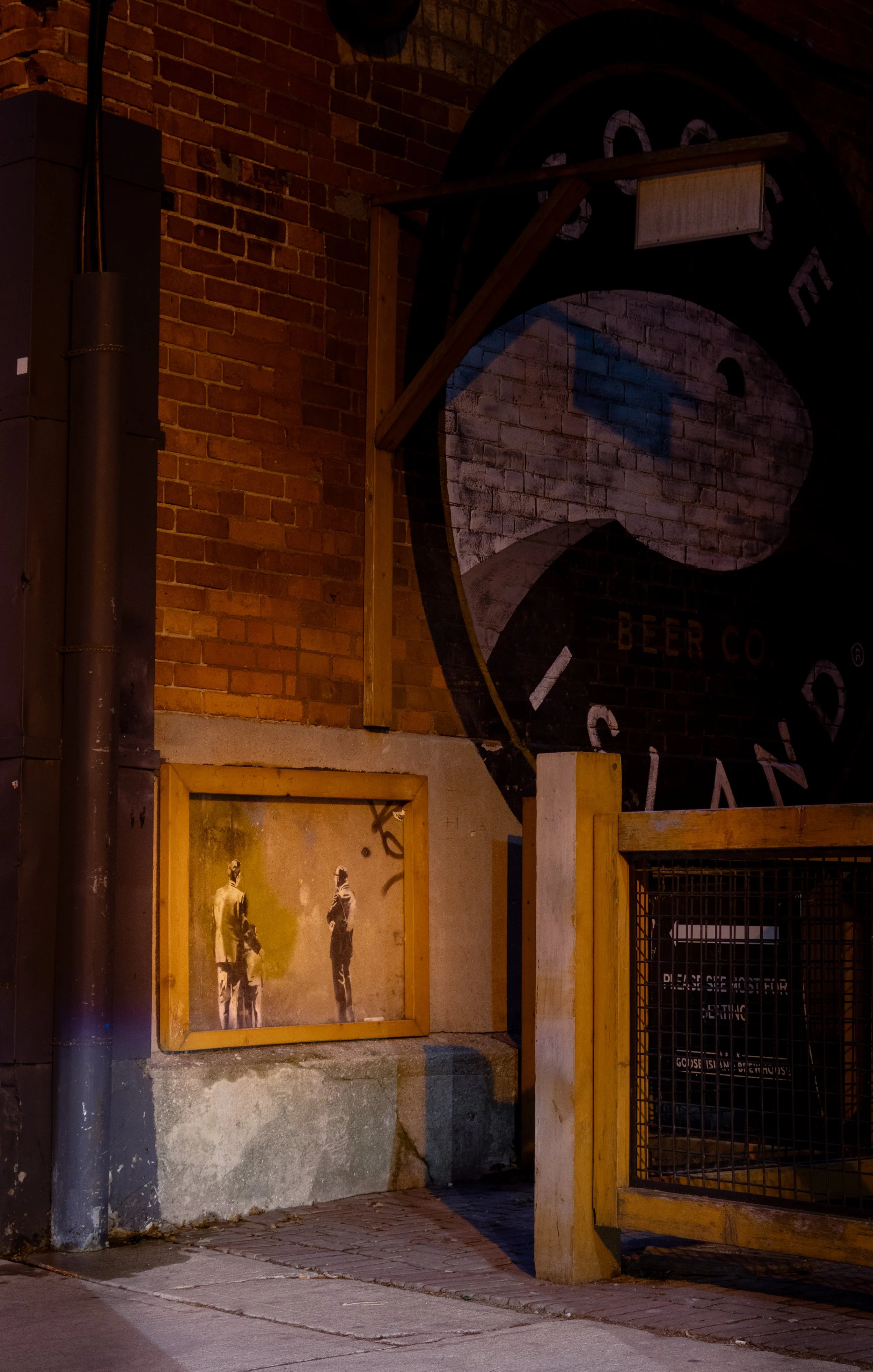
This photograph documents one of the only remaining Banksy works still visible on the street in Toronto. Unlike nearly every other piece of graffiti in the city, it is encased in plexiglass; protected from weather, erasure, tagging, or any form of interference. The irony is immediate and unavoidable: an illegal act of vandalism has been elevated to a cultural artifact deserving preservation, while all other graffiti around it remains disposable.
The protection raises a simple but uncomfortable question: who decided this mattered? Was it the city? The building owner? The tenant? Whoever made that decision assumed authority over the artwork, and by extension its meaning, value, and right to exist. This speaks directly to how graffiti becomes legitimized over time through legal, cultural, and economic forces, rather than through artistic intent alone (Brazioli, 2025)
Banksy’s work complicates public perception of graffiti because it occupies a strange middle ground between illegality and institutional acceptance. Scholars have long debated how art moves between “low,” “middle,” and “high” status, often through external forces such as fame, market demand, or academic validation (Lau, 2022). This piece demonstrates that in real time: what would otherwise be scrubbed away is instead preserved, framed, and guarded; not because it is graffiti, but because it is Banksy.
The building itself becomes part of this transformation. Graffiti is typically understood as something that lowers property value, disrupts space, or signals neglect; a concern voiced frequently by business and property owners in Toronto (Battler, 2017; Taney, 2025). Yet here, the opposite seems possible. The presence of a famous graffiti artist may actually increase the cultural or economic value of the property. The same act of painting a wall without permission produces radically different outcomes depending on the artist’s name and relevance.
The plexiglass casing tells its own story. It is cracked, suggesting someone has attempted to break it; perhaps to damage the work, perhaps to free it, perhaps to challenge the authority of its protection. Even more telling is the small tag partially visible in the frame. Whoever installed the plexiglass did not remove it. That tag, likely insignificant and illegal on its own, is now preserved as collateral. Protected not because it is valued, but because it exists beside the work of a “great.”
This accidental preservation exposes the hierarchy within graffiti culture itself. Tagging is often dismissed as disruptive or disrespectful, even by those who support street art more broadly (Dimas, 2021; Gross et al., 1997). Yet here, it survives, frozen in place, shielded by proximity to fame. This aligns with research that frames tagging as a foundational but marginalized form of graffiti tied deeply to identity, territory, and visibility, but rarely afforded legitimacy (Taylor, 2011).
While photographing this piece, a stranger and his wife stopped beside me. The man enthusiastically explained the work, its meaning, and its importance, while his wife “listened” politely. I introduced myself, and we spoke about the contradictions surrounding the piece: its protection, its ownership, and the irony of an anti-authority artist being institutionally safeguarded. He remarked that what mattered most was that the work remained in its original location, not extracted into a gallery like the others.
That sentiment reflects a broader belief within street art discourse: that meaning is inseparable from place. Removing graffiti from its environment fundamentally alters its message (Radice, 2017). Yet preservation in place still raises questions. Who owns the work now? The artist? The public? The property owner? Or the institution that decided it was worth saving? Is this art protected by the city of Toronto as a cultural landmark?
Banksy’s anonymity complicates this further. As the man pointed out, identity may be beside the point. Banksy could be a man, a woman, or a collective. This ambiguity resists the very systems that now protect the work. Scholars have argued that graffiti thrives precisely because it destabilizes authorship, authority, and permanence (Halsey and Young, 2006). To protect it, is in some ways neutralizing it.
Why this wall? Why the side of a restaurant bar? Graffiti writers are acutely aware of spatial politics; foot traffic, visibility, risk, and symbolism all shape where work appears (Tokuda, 2021). The choice of location is never random, even when the meaning remains opaque. That opacity is part of the work’s power.
This photograph captures a moment where graffiti’s contradictions collide: illegality and preservation, anonymity and celebrity, resistance and institutional embrace. It exposes how value is assigned not by action, but by authorship and how accessibility to legitimacy remains uneven. In protecting this work, we reveal exactly how selective our respect for public art truly is.